Thursday, July 31, 2008

Child Labour

It's finally time to confess that whenever V. and I go to work, we send our little 2 and 1/2 year old off to earn a few additional dollars each day (after all, we are still paying that mortgage back in America)...


But, as you can see below, Will is still a very happy boy!

Tuesday, July 29, 2008

The Rebel American

Today I lectured for nearly six hours, which, at my ripe old age, is physically exhausting.  At the end of my day I took the CityCat boat from the university to our neighbourhood landing, and then I walked from there through the Toowong Village Shopping Centre on my way home.  Tired and worn out, I found my tolerance for slow walkers in some of the narrower passageways had disintegrated.  During my last few turns in the Centre I was overcome with the urge to resist walking on the left (as one does in Australia) and instead started WALKING ON THE RIGHT SIDE--much to the chagrin of several Aussies coming from the opposite direction.  Oh, how sweet it was to walk on "my side" once again, even if it was for a few brief moments.  I believe a little rebellion every once in a while can do the soul good.

Saturday, July 26, 2008

His Last Lecture

I just learned that Randy Pausch, the Carnegie Mellon computer scientist, has died. You might remember that I posted an entry about his ideas on time management a few months back. Since then his "Last Lecture" book has become an international bestseller--I have even seen it at bookstores here in Australia. For months I have been checking his blog as he detailed his fight against pancreatic cancer, including posting the "box scores" of his blood tests. There had been no new entries since the end of June, and it looks like he quickly declined in the last two weeks. Randy was 47, and he leaves behind his wife and three young children. Watching his CMU last lecture was inspiring for me. And, being so close to his age, the slides of his childhood and even some of his dreams were eerily similar to some of my own.

Goodbye, Randy.

Friday, July 25, 2008

I'm a Podcaster Now

We had some (unusual) significant rainfalls the last few days, which are finally putting the Brisbane dam levels above 40% (later today), the first time they have reached that level since 2005. There will be some easing of water restrictions, but nothing that will really matter until the dams reach 60%. With all this wet weather has come some cold temperatures, which have caused many of my colleagues to "rug up" like the girl in this photo. The max yesterday was around 14 C (57.2 F), which is frigid for longtime Queenslanders, most of whom don't have any real heat in their homes. As for me, I find this weather quite nice!

This week I began giving lectures for the second semester at UQ. I'm teaching a new course, Social Neuroscience, which I'm really excited about because the topic is very close to my core interests. But it also requires a lot of preparation because I am having to read a lot of new research that has been published only in the last 2-3 years. As part of the course, I'm recording my lectures as video podcasts. I have some software on my laptop that records the slides the students are seeing while also recording the audio. I am making the podcasts available on my socialneuro website, where you can even subscribe to the entire course via your local iTunes app. Listening to myself, however, makes me wish for a low, deeply resonating voice like you hear on FM radio. A guy can dream...

Wednesday, July 23, 2008

Wet Ones

A blurb from my main source of weather information these days:
Tomorrow, the rain will shift further east and south as a trough heads towards the coral sea. Onshore winds will increase and continue feeding moisture into this trough. All in all residents of eastern QLD should take a brolly everywhere or they may just get soaked.

Sunday, July 20, 2008

Recovering

In the days since my last post, our little family has faced some major challenges and savoured a few minor victories. V. is once again in action, having gone back to work last week. She still feels the back pain, but has learned some good exercises from her physiotherapist that have strengthened her back already. Will was pretty much back to normal last week, except for a lingering cough. Even I enjoyed 2-3 normal days of work until I fell to some horrible influenza virus. I haven't been that sick since I was a kid. I spent over three days in bed, and I'm just beginning to feel normal again this afternoon. Now we worry that Will's coughs and fever are once again on the rise...

We also had some action on our house. We had two "legitimate" offers that we counter-offered on, and we're still waiting for all that to conclude, so stay tuned. All I can say right now is that we won't have a penny (well, a 5 cent piece here in Oz) to buy a piece of cheese if the buyers accept our latest offer.

Oh, and I also stood in line for five hours last Friday (July 11) to get a 3G iPhone. Yes, I got it...eventually. It couldn't be activated by Telstra until Sunday, but now I am the proud owner of the latest from Apple. Someone called me a "Fanboy" for my actions. Hmmm, what other first Apple products have I bought over the years? Here's a few that I can remember:
I think I like "FanMan" instead.

Sunday, July 6, 2008

An Australian Micronation (Since 1970)

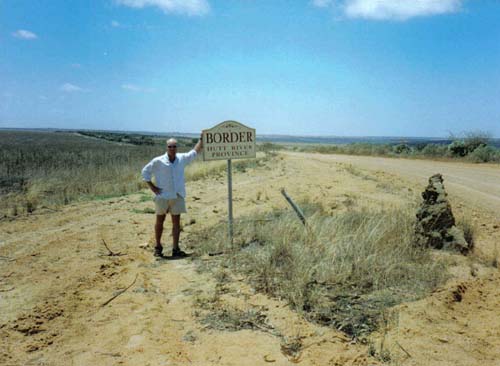
Not long ago I came across an internet reference to the Principality of Hutt River. I have never heard any Australian speak about this "micronation," or come across it on the news. But, at 75 square kilometers (over 18,500 acres), and about 500 km from Perth in Western Australia, I was surprised that I didn't even know it existed. The story, as I can gather from various websites, including this Wikipedia entry, is that it was originally founded by Leonard George Casley in 1970 as a result of a dispute he had with the Australian government over quotas on wheat. In his interpretation of Australian and British law, Prince Leonard (as he is now known) argued that he could legally secede from Australia, although the government of Australia has never recognized the secession. Interestingly, an exhibit at the National Museum of Australia in Canberra does seem to acknowledge Prince Leonard's act as legitimate. The principality itself has few inhabitants, but issues its own stamps and coins (which are collected worldwide), has commissioned naval officers, issues car registrations and passports (over 13,000 to date), and receives off-shore company registrations. Looking around the site, I was amazed to see that Princess Cruises recently offered an excursion to the principality so that passengers could have "tea with the prince." In this picture you can see Prince Leonard standing at the left while the Princess passengers enjoy their tea:
How did so many people know about this? And, what was the attraction in visiting such an out-of-the-way place? I do think it's pretty cool that Australians have tolerated this whole enterprise. I suppose that any such move in the United States would quickly end up with some sort of stand-off with the FBI and ATF. If you happen to have visited the Principality of Hutt River, please leave me a comment. I think it would make an interesting holiday destination (check out the pictures at this fellow's website):
Saturday, July 5, 2008

Status Update

It's never seems to be boring in our home here in Toowong. Just as V. started to rise from her bed rest with a more manageable back, Will came down with some miserable virus. The poor guy has been running a fever and won't eat much. After 3-4 days of dramatic refusals of nearly anything we offer him, I'm really hoping this morning he'll wake up back and be his old self. V. will return to work on Monday. She's still taking a painkiller and can't sit easily on a regular chair, but we are staying optimistic that it's all going to get better. And maybe a little boring...at last.

Tuesday, July 1, 2008

Periods of Waiting

One surprise in moving to Australia has been the way that business practices are so different between countries. I mistakenly believed that in any competitive, "free-market" system, businesses would set up incentives and rules that would optimize choices for the customer. This was a rather naive belief, I now admit. For example, trying to make sense of the different mobile phone plans and broadband services here is a nightmare, especially as I ponder adding a data service when I finally (if ever) get an iPhone. There's even a website where people have serious discussions of all these plans. The absence of mortgages with fixed interest rates for the life of the loan is another mystery. Even paying the rent every two weeks is something new.

Another example of cultural differences in business practices is how health insurance works here. Sure, there is basic universal healthcare, which we have been using for the past year quite happily. But nearly everyone supplements this with private insurance. Depending on the plan, private insurance can include several extras, such as dental, eyeglasses, psychotherapy, etc., which are not normally included in the government coverage. In addition, with private health insurance one has more options for hospital and specialist care. After being here a year we finally got around to signing up for private health insurance last week. Interestingly, many of the extras that come with this new insurance require a waiting period of between 2 and 12 months, depending on the "extra." This is the time from when we started paying for the insurance to the time when we can actually make a claim for the service. Thus, there are several services that we will have to wait months to use.

In the booklet that accompanied our welcome kit, I found this explanation for the waiting period:
Before you can start claiming for hospital services, you must be in your chosen cover for a set period of time, (known as a Waiting Period). Customers can only claim benefits after they have served their waiting periods. This is necessary to keep health cover fair. Waiting periods protect existing customers who pay premiums to a fund over time, for when they might need health cover. If we didn't have waiting periods, people might join a fund to claim for a planned item and then leave.
That last sentence makes me wonder why this doesn't happen in the United States. That is, in the States there are no "Waiting Periods" (I think), so why doesn't this problem of people joining and dropping their coverage as soon as some procedure is completed exist there? I also like the middle sentence about "this is necessary to keep health cover fair." It captures the essence of many policies in Australia. There's a great emphasis on things being fair here that is best summed up by the belief in "a fair go" for everyone. (Here are a couple of interesting and contrasting takes on the Fair Go: here #1 and here #2). Perhaps it is this cultural value (one not widely shared in the U.S.) that underlies the Waiting Period. Then again, it doesn't explain why there are 15 variables to consider when choosing my mobile phone coverage.

Monday, June 30, 2008

Anti Anti-Smoking

I heard a little of Joe Jackson's 1982 hit "Steppin' Out" tonight, followed that up by watching a YouTube broadcast of the original video, and finally ended up looking around Joe's website. "Steppin' Out" was on the "Night and Day" album, which my roommate in college used to play quite a bit, so I remember all those tracks very well. There was always something magical about this song in particular. It has a smooth dance rhythm underneath a series of slow chord changes, creating a hypnotic feeling as you listen to the lyrics. The video itself is a great fantasy about early '80s New York City life:


I remember that Jackson was upset about this video when it came out, and vowed to not make another because he thought such videos unnecessarily associate images with the song that the artist never intended.

Anyway, as I clicked away on his website, I came across a section in which Joe argues against all the "anti-smoking hysteria." On my recent trip to Croatia I was slightly annoyed by all the smoking that was going on during the dinners and coffee breaks, but some of the other people I was with really started moaning loudly about the smoke. It wasn't that long ago that I was frequently standing among smokers (or sitting with my relatives when I was a child) and not really noticing the smoke. I wondered how much my recent reaction was due to years of listening to all these anti-smoking campaigns. Don't get me wrong...I am not an advocate for smoking. But I did find Joe Jackson's pamphlet interesting. He thoughtfully reviews the evidence for the causes of secondhand smoke, as well as the direct and indirect effects of smoking on health. He concludes in a section titled "How to be Healthy:"
I think there are two different approaches to living a healthy life. One is to try very hard to avoid everything which current opinion holds to be bad for you, be guided by ‘experts’ and statistics, feel very guilty about any human imperfection, and generally believe that if you work hard enough, you can achieve invulnerability. This is very American. The other is to enjoy yourself, be reasonably moderate, be sceptical of the ‘experts,’ and let the chips fall where they may. This approach is more European - or used to be. These are broad stereotypes, but they’re both reasonable and most people are drawn more to one than the other. The problem comes when the first group starts to dictate to the second. Especially when there’s no real proof, that either approach works best.
I think I'll go have another Diet Coke and ponder the evidence.

Sunday, June 29, 2008

One Year On

It was a year ago today that we arrived in Australia with our six suitcases, three carry-ons, a car seat, and a stroller. Despite everything that has happened since, I can't say that I feel like this is "home" yet. Partly this is because we still own our old home in Atlanta, as no one has yet made a serious offer on it for nearly 17 months (we've now lowered the asking price to below what we paid for it). But the main reason is that it's going to take more time than I thought to develop real friendships--a "social support network," as they say in my field--to replace what we lost by changing continents. Sure, we still have contact with many of our friends and family members back in the States, but the effect of the great physical separation that now exists is tremendous. I think if we had moved to San Francisco instead, for example, it would have been much easier because we would be only a couple of time zones and a $400 flight away. Now, we face $6000-9000 plane tickets for the three of us to go back, in addition to lots of logistics when it comes to planning a time to make phone calls.

The effect of not having of a fully developed social support network was quite acute this week when V. was knocked down with severe back pain. On Wednesday night she suddenly woke up screaming because she was unable to move. The next day her physician arranged to have a CT scan of her lower spine made, and it turned out that she had 2-3 herniated discs! It appears that V. has been living with back pain on and off for many years, but never really dealt with it. This probably got worse recently due to our long plane flights and her having to lift heavy luggage and Will during our travels. The doctor immediately ordered V. to go on bed rest for a week, prescribing a strong painkiller and another drug to reduce the inflammation. Since Thursday I have been taking care of Will during all his waking minutes, and this will continue until the end of the coming week, except when he is at daycare. I will need to do all the shopping, cleaning, and cooking while trying to catch up with my work. More importantly, I have had to cancel my July 9 trip to the States, which included visiting my parents in Arkansas and Oklahoma, because it is unclear when V. will be functioning again. She can't even pick up Will from his crib at this point, so leaving them on their own for 10 days is impossible. I have far too much to do at work, so all of this couldn't come at a more inconvenient time. Alas. I suppose health problems never come at convenient times, do they?

As some of you know, V. was on bed rest for nearly 4 months when she was pregnant with Will, so being bed rest veterans, I know we'll be OK. A big difference this time, however, is that we don't have all our friends around to help out like we did back in Atlanta. If you are ever contemplating moving to another part of the world, don't underestimate the presence of your friends in your decision. Some people can do quite well on their own, as we have, for the most part, but I can assure you that making lots of new "old friends" requires much more than a year when you move to a new country.

Thursday, June 19, 2008

Lagged

We are home in Brisbane safe and sound. Of course, all three of us are messed up with jet lag and major sleep deprivation. Will didn't sleep at all during our second flight from Singapore to Brisbane, but he did sleep from 8 am to 7 pm once we got home. Now it's 4:51 am on Thursday and Will is watching "In the Night Garden" on a DVD that we bought in England. I have been wide awake since 1:30, worrying about everything I have to do in the next three weeks (before I leave for another overseas trip). It also gives me a chance to update you about what I have been doing for the past week.

The photo above is of the harbour in Opatija, Croatia. As you can see, it is a beautiful place. In fact, I was impressed with the beauty of nearly every part of Croatia I saw on this trip, from the small villages that look like their Italian counterparts in Tuscany to the mountain ranges that have been tackled by a series of amazingly long tunnels. The tourism board advertises that Croatia is "The Way the Mediterranean Used to Be" because it is fairly undeveloped and uncrowded, compared to other parts of Europe. I did notice lots of major construction going on, however, so it is likely that Croatia will "catch up" to those places in a few years.

I skipped the last day of the conference to go on a day trip to Venice, arranged by a local tourist agency. My colleague Aarti and I took a 2-hour bus ride to the port city of Porec, where we then boarded a boat for another 3-hour trip in choppy seas to Venice. It rained for the first two hours we were there. Walking down all those narrow alleys with umbrellas was challenging. We had only six hours in the city, so I separated from Aarti to find some of my favourite spots that I had discovered on one of my previous two trips to Italy. I didn't have a map, so I became a rat in a maze, running into blind alleys and assorted dead ends. Of course, this was Venice, so being lost wasn't such a bad thing. I finally ended up at Scuola Grande di Rocco, which is the site of Tintoretto's own "Sistine Chapel." I am a sucker for 16th Century religious paintings...Finally, after a quick 30-minute water taxi ride around the city, we boarded our boat at 5:00 for the 5-hour trip back to Opatija.

The next day I headed to London, which became an ordeal because the trip involved a long bus ride to Zagreb, two flights that connected in Frankfurt, a landing at Heathrow where I saw Air Force One parked (Bush was in London), a 45-minute ride on the London Tube from Heathrow to Victoria Station because there was no room on the airport bus that I planned to take, and then a train ride from Victoria Station to Brighton, where V. and her dad picked me up at 10 pm. The next day was spent with V.'s family and Will playing in their garden. When we began packing up the car in the afternoon, we found Will sitting in his car seat by the front door, all ready to go. If only he could carry a suitcase or two! We took a two-hour bus ride back to Heathrow, where we waited around the airport for another four hours. We finally took off for the first leg of our trip at 10 pm, arriving in Singapore 12 hours later. The Singapore airport is fantastic. We were at the newest terminal (3), which rivals any major shopping center and it includes gardens, waterfalls, a free cinema, and plenty of cafés and restaurants. Will spent a lot of time at the indoor playground with some other kids. I was excited to see the new double-decker Airbus 380 parked at one gate. I got a few hours of sleep on the first flight, and none on the second because Will was wide awake and raring to go the whole time. It didn't help matters that Singapore Airlines likes to spend the first three hours of each flight with all the lights on so that they can serve you "dinner" in the middle of the night. Then, just after you have had time to digest your food for a few hours in the dark, they turn on all the lights again to serve you breakfast. Ugh!

But now we are back in the land of clean air, uncrowded places, and silly breakfast TV shows. I must say that I am really glad (and lucky) that we live in Australia. Sure, it's a pain to get here from anywhere else in the world, but it always feels a bit like coming back to paradise (and now, "home") when I step off the plane.

Friday, June 13, 2008

Croatia Wins!

Greetings from Opatija, Croatia. I realize that many of you may not know exactly where Croatia is, so here's a map to help orient you to my present location:


View Larger Map

I am attending a conference meeting of the European Association of Experimental Social Psychology, which occurs every three years. It's really not that different from any other conference that I attend, except that there are many more smokers. I can't remember the last time I was at a coffee break with a bunch of academics and had cigarette smoke blow into my face, as happens every morning and afternoon here. Croatians themselves like to smoke, and the restaurants I have visited don't have separate smoking sections. Perhaps you would like a little Camel smoke with your cheese strudel? This is your place!

Opatija is an old seaside town, with many small hotels overlooking a beautiful harbor. My guidebook says that it is a popular holiday destination for people from all over Europe. Someone told me that tourists from the Czech Republic like to bring along all their own food on vacation, and therefore don't contribute much to the local restaurant business. Thus, a controversial proposal is being floated to ban the bringing of food into the country by visitors, which the Czechs very much resent. I suppose another group of tourists unhappy with the Croatians today are the Germans, who were thrashed last night in the Euro 2008 soccer tournament. My room overlooks the main street through Opatija, so I got to watch (and hear) crowds of red and white checkered Croatians celebrate underneath my window well past midnight. There were even a few sirens now and then, so perhaps things got a little too wild.Tomorrow I am skipping the conference to take a day trip to Venice. We're only a couple of hours away, so how could I resist my third visit to that spectacular place? It's been nine years since I was last there, but I imagine things haven't changed very much. More later...

Tuesday, June 10, 2008

Tragic Biographies

I am writing this entry from a hotel room located just a few hundred yards (or meters) from one of the runways of Heathrow airport in western London. We have been in England for about 10 days visiting V's family at a holiday resort in Lowestoft, which is in Suffolk on the east coast. Consistent with V's predictions, it rained nearly six days in a row. Our resort was sort of a sad place, with no internet connections and few people under the age of 70. Will has been doing great the whole time--even the marathon pair of flights via Singapore went well. This morning I am leaving them behind in Brighton while I attend a conference in Croatia. Now that I am back in the land of the living, I hope to be blogging regularly again.

About the title of this entry: it was the name of a section at a WH Smith bookstore in Lowestoft. I like the idea that when someone happens to be in the mood for a "tragic biography," they can easily find it there...

Tuesday, May 27, 2008

Some Perspective

I should be marking student papers, but I got distracted thinking about the following "little" exercise. Most of my information came from the ever-helpful Wikipedia. Note that I pretty much had to stop after the age of 50, but I will try to add more in the next month.

How Old Are You?
  • If you’re 13, you’re the same age as Michael Jackson the year he and the rest of the Jackson 5 had four number one hits, including “ABC.”
  • If you’re 14, you’re the same age as Miley Cyrus when her debut album “Hannah Montana” went triple platinum.
  • If you’re 15, you’re the same age as Tenzin Gyatso when he was enthroned as Tibet’s 14th (and current) Dalai Lama.
  • If you’re 16, you’re the same age as Neil Patrick Harris when Doogie Howser, M.D. first aired.
  • If you’re 17, you’re the same age as Martina Hingis when she held the No.1 ranking in both singles and doubles women’s tennis.
  • If you’re 18, you’re the same age as RIngo Starr when The Beatles released “Love Me Do.”
  • If you’re 19, you’re the same age as John Tyler Hammons in 2008 when he was elected mayor of Muskogee, Oklahoma, a city of 38,000.
  • If you’re 20, you’re the same age as Bill Gates when he founded Micro-soft in 1975 (the hyphen was dropped shortly after).
  • If you’re 21, you’re the same age as Mick Jagger when he recorded “(I Can’t Get No) Satisfaction” with the Rolling Stones.
  • If you’re 22, you’re the same age as Jayde Nicole, the 2008 Playboy Playmate of the Year.
  • If you’re 23, you’re the same age as Tiger Woods when he won his last four starts, including the PGA championship, and finished the season with eight wins—a feat not achieved in the past 25 years.
  • If you’re 24, you’re the same age as Lee Harvey Oswald when he assassinated John F. Kennedy.
  • If you’re 25, you’re the same age as Steve Jobs when he and Steve Wozniak released the Apple II computer.
  • If you’re 26, you’re the same age as Albert Einstein when he published his paper stating that e=mc2.
  • If you’re 27, you’re the same age as Kurt Cobain, lead singer of Nirvana, when he killed himself.
  • If you’re 28, you’re the same age as Julie Andrews when she appeared in "Mary Poppins."
  • If you’re 29, you’re the same age as Olivia Newton-John when she played Sandy in “Grease.”
  • If you’re 30, you’re the same age as Schubert when he died of typhoid fever (after writing nine symphonies and hundreds of other pieces of music).
  • If you’re 31, you’re the same age as John Lennon when he wrote “Imagine.”
  • If you’re 32, you’re the same age as Thomas Edison when he invented the electric light bulb.
  • If you’re 33, you’re the same age as Matt Groening when his first series of shorts called “The Simpsons” debuted on The Tracy Ullman Show.
  • If you’re 34, you’re the same age as Harper Lee when her To Kill a Mockingbird was first published.
  • If you’re 35, you’re the same age as Harrison Ford when he appeared in the first “Star Wars” movie.
  • If you’re 36, you’re the same age as Ann Bancroft when she played Mrs. Robinson in “The Graduate.”
  • If you’re 37, you’re the same age as Frances Crick when he, James D. Watson, and Maurice Wilkins co-discovered the double helix structure of DNA.
  • If you’re 38, you’re the same age as (Sherpa) Tenzing Norgay when he and Sir Edmund Hillary became the first people known to have reached the summit of Mount Everest.
  • If you’re 39, you’re the same age as Martin Luther King, Jr., when he was assassinated.
  • If you’re 40, you’re the same age as Isabel Allende when her first novel, The House of the Spirits (La casa de los espiritus), was published.
  • If you’re 41, you’re the same age as Ernest Hemingway when he published For Whom the Bell Tolls.
  • If you’re 42, you’re the same age as Elvis Presley when he died.
  • If you’re 43, you’re the same age as Tony Blair when he became Prime Minister of the United Kingdom
  • If you’re 44, you’re the same age as Jerry Seinfeld when “Seinfeld” debuted its final episode.
  • If you’re 45, you’re the same age as Nelson Mandela when he was sentenced to life imprisonment in 1964 for his involvement with the African National Congress.
  • If you’re 46, you’re the same age as O.J. Simpson when his ex-wife Nicole Brown Simpson and her friend Ronald Goldman were murdered.
  • If you’re 47, you’re the same age as Barack Obama when he won the nomination for the Democratic candidacy for the U.S. presidency in August 2008.
  • If you’re 48, you’re the same age as Jeannie Longo, the greatest female cyclist of all time, when she won her 14th French Road Race.
  • If you’re 49, you’re the same age as Gandhi when he led his first protests against the British in India in 1918.
  • If you’re 50, you’re the same age as Charles Darwin when he published The Origin of Species, the first time his theory of evolution appeared in print.
  • If you’re 61, you’re the same age as Abraham Lincoln when he was elected president.

Saturday, May 24, 2008

Up, Up, and Away

A few weeks ago V. and I went on a hot air balloon ride over Brisbane for her birthday. Will spent the night before at our friends' house (where he enjoyed himself!) so that we could get to the balloon meeting point at 5:45 a.m.  It was the first time Will had slept away from both of us, so that was a bit of an event itself.

Anyway, we met up with the staff of Balloons over Brisbane in a park in West End.  We then piled into one of two vans, each pulling a trailer with a balloon basket and the balloon itself.   There are several places in the metro area where balloons can launch, with the particular location determined by the weather conditions that day.  We ended up driving to a vacant lot in one of the western suburbs. Interestingly, a competing balloon company was there as well.  It took about 20 minutes for the crews to unpack the trailers and inflate the balloons with large fans.  Once the balloons were nearly full (and still lying on their sides), the crew then heated the air with large gas burners.  In a matter of minutes we were climbing into the basket and we had lift off.

We couldn't have asked for a more beautiful morning to go up in a balloon.  Except during those moments when we had to climb higher by turning on the burners, it was extremely quiet.  We could hear all the sounds of each neighborhood as we flew overhead at less than 1000 feet (and usually around 500 feet).  Every dog who happened to see us would start barking, which would set off a cacophony of barking throughout the neighborhood.  Our captain told us that all that barking was the biggest complaint they received at his business.  We continued to peacefully drift westward, and slightly south, for the next hour, watching the city slowly wake up on a Saturday morning.
The landing was especially exciting.  It took about 20 minutes of low flying before our captain finally found a small park where we could land that was also in our flightpath.  In the meantime we flew so low that we brushed the tops of trees.  People on the ground could hear us coming because of the gas burners, so they would be waiting out on their verandas as flew over their rooftops and found them in their pajamas eating breakfast.  Everyone waved, and children chased after us on their bikes.  The ground crew that had been chasing us all along managed to run out of the van to grab us just as we came down.  When we finally landed with a big thump, several people in the surrounding neighborhood came out to meet us.  It took another 20 minutes to deflate the balloon and pack it back into the trailer.  We then headed back to the West End for a champagne breakfast.  What a great way to start the day!  More pictures of this trip can be found here.

Thursday, May 22, 2008

Mac Nostalgia

I have been an owner of at least one Apple Macintosh computer for more than 23 years now (sometimes I have owned and/or personally managed more than ten Macs at once).  In fact, my very first Mac was the original 128K (the total memory of the machine) model, complete with a black-and-white, 9-inch screen and an 8 MHz Motorola 68000 processor.  Everything (i.e., all my files) was saved on 400 kB single-sided floppy disks, and you had to run all the applications off the floppy drive as well, as there was no internal storage.  I bought it as part of a university student package in the fall of 1984, which included a modem and an ImageWriter (a nice dot-matrix printer).  It cost me about $3000, which was equal to my entire federal student loan that year.  About a year later I was so in debt that I had to sell the whole thing off to pay some loans.  But, I quickly bought another Mac, and another one after that, and so on.  I remember watching other students working on their IBM PCjrs or clunky big PCs, always wondering why they preferred the ugly interface of their machines over that of my cool Mac--except, of course, I knew that their machines were much cheaper.

Anyway, I have endured many changes in my Macs over the years, and have spent tens of thousands of dollars on Mac products.  I finally decided to invest in Apple stock in 2002.  Lucky for me, I bought most of my stock prior to the launch of the iPod for Windows, and when I sold off my final Apple shares last year, I had made a very healthy profit, quadrupling what I had originally invested.

It's strange to think about how so many aspects of my life have been enmeshed with this specific computer line all these years. My Macs have helped me with dozens of undergraduate papers, scores of applications for graduate school and academic jobs, online chats with hundreds of people, thousands of email messages, statistical analyses of every research project, editing photos of my family, and even writing this blog.  Is it no surprise then that I get a bit nostalgic when I come across pictures of old Mac desktop screens, a story about the original start-up sound, and a link to download a collection of early OS alert sounds? Yes, I am sure that you Windows users have similar pangs of nostalgia, but I think they would be even sweeter if you had owned a Mac!

Tuesday, May 20, 2008

Opposite Days

Will has mastered the concepts of "up" and "down" in the past few weeks.  He loves repeating those words while he points in the corresponding direction.  Even during the drive home from his daycare he helpfully narrates every segment of our journey as we go up and down the hills.  

I am looking forward to the day when he can remind me of the seasons as well.  What I thought would be the most obvious and easiest part of living south of the equator has turned out to be one of the most challenging.  After decades of learning what to expect during October, January, or July, my brain seems unable to comprehend that everything has changed.  I didn't really enjoy the summer months the way I might normally do (it didn't help that the Christmas and New Year holidays interrupted things), but now, just when I am finally feeling ready for summer, it's getting cold in Australia.  Sure, there isn't any snow, and I will probably never wear gloves and a scarf in Queensland, but it just doesn't feel right turning on the heat and putting on a sweater in late May!  What's more, my friends and family in the U.S. keep mentioning their warmer days and the upcoming Memorial Day weekend, which I have long associated with the beginning of summer.

It appears that even long-standing transplants from the northern hemisphere never really master the opposite seasons.  I have noticed one American, for example, who has lived here over ten years but still refers to the upcoming "summer break" between semesters at UQ next month.  Another expat mentioned a "fall" conference that will occur in October.  The other day an Australian asked me, "when did you move here?" and I quickly answered, "last summer," which either shortens our stay or lengthens it by six months, depending how he interpreted "last."  To avoid such errors, I have been trying to rely more on using the months instead of the seasons in my conversations, but that feels quite awkward (e.g., "I am looking forward to getting a lot of work done next December-January-February").

Because Will will learn the opposite associations with the calendar, maybe he'll be able to help his father with this problem someday.  Of course, this might also create another source of confusion in the parent-child dynamic.  Perhaps then we'll just have to move to the equator.

Wednesday, May 14, 2008

Incompetent and Unaware

One of my favourite articles published in social psychology in the last 10 years is Justin Kruger and David Dunning's (1999) "Unskilled and Unaware of It: How Difficulties in Recognizing One's Own Incompetence Lead to Inflated Self-Assessments," which was published in Journal of Personality and Social Psychology, 77, 1121-1134.  Across four studies, different participants were tested on their sense of humor, logical reasoning, and grammar. They were also asked to indicate what they perceived their abilities in these areas to be, relative to other people. Across the four studies, participants always believed they were better than average--sometimes dubbed in the literature as the "Lake Wobegon" effect, after Garrison Keillor's mythical Minnesota town, where all the children are "above average."  The problem, of course, is that everyone can't be above average.  In fact, half of the people are in the bottom 50% of scores on whatever ability we're talking about!  Thus, it turns out that the people who are most incompetent on a task are also the people who are most unaware of how incompetent they are.  You can see this pattern in one of the figures that appears in the Kruger and Dunning article:

In the years since this article was published, I'll admit that I have been prone to make occasional observations about other people whom I believed were unaware of how entirely incompetent they were, whether they were salespeople, clerical staff, students, or even other academics.  Interestingly, and predictably, I never really wondered about myself with respect to this article.  That is, as an academic (for example), I like to think of myself in the 3rd or Top Quartile in terms of teaching ability, creativity, writing ability, logical reasoning, etc.  But, of course, on any or all of these dimensions I am likely inflating my own competence.  In my defense, I should point out that in my occupation there are few objective measures of these talents. Regardless, the past month at work has been very challenging for me--which has caused me to re-evaluate my general competence as an academic.  On top of that, yesterday one of my manuscripts, which had been under review since December, was flat out rejected from one of the most prestigious journals in my field.  The reviewers' comments were somewhat harsh, such as, "one wonders what the point of this study is," and "who would want to read this article?"  I can't help (today) feeling a bit like I'm "unskilled and unaware of it."  To keep touch with reality, perhaps I should post the following amended figure above my desk:

Tuesday, April 29, 2008

To Catch an EgoSurfer

I just woke up from a dream in which I was talking to someone I knew when I was five years old.  One of the drawbacks of having changed towns every few years is that I don't have contact with any childhood friends.  I believe the friend I have known the longest is Laurel Anderson, whom I met when we moved to Rockford, Illinois in January, 1979, when I was 15.  Laurel is an artist living in San Francisco with her husband Craig.  I met her on my first day at Guilford High School because I was assigned the seat in front of her in English.  Our lives became intertwined over the next few years as she talked me into joining the debate team, we went on a double date (or two), we gave the commencement addresses at our high school graduation ceremony,  and we went off to attend rival colleges in Iowa.  She eventually saw the light and transferred to my university (the University of Iowa), so we got to spend a couple of years there together.  I attended her New Year's Eve wedding to Craig a few years later (1990?), but that's the last time I saw her.  We recently reconnected on Facebook, along with another high school friend, and Sadie Hawkins date, Lisa Weissbard.

Before moving to Rockford, however, there were are other places and other friends.  I first attended Oakwood Elementary school in Plymouth, Minnesota (a suburb of Minneapolis near Wayzata).  There I remember John Yngve (or was it J.P.?), Steve Ruff, and Lisa Crocker (my first crush).  I used to know more names from that era, but that part of my brain has been taken over by being a parent.  By the way, the person I was dreaming about just prior to writing this was Deirdre Hansen, the daughter of one of my dad's friends.  I caught up with her father at my aunt's funeral a couple of years ago.

We moved to Dixon, Illinois in 1973, when I was 10. There I immediately became friends with two neighborhood kids my age--Stephan Mayfield (or was it Stephen Mayfield?) and Scott Smith.  At school I had a few tangles with Janet Trent, who was my 5th and 6th grade nemesis (blood was involved on at least one occasion), competed with Kim Taylor (who seemed to beat me in any competition), "stalked" a gymnast named Elizabeth Nehls (Franklin), and became best buds with Chris Shaw, Howie LaFevre, Andy Near, and Larry Knicl, whom I think I had an email exchange with about ten years ago. I also rode the bus with Beth Stitzel.  Beth later attended Iowa while I was there.  I saw her a few times during my freshman year, but we lost touch.  It's funny, but I know that there was another girl whom I became obsessed with in 8th grade, and my friends at the time tried unsuccessfully to help our budding romance, but I can't remember anything about her. Oh, how love is fleeting...

It was during this time in Dixon that my family spent a summer in Wagga Wagga, NSW.  There I had my first kiss behind the tuck shop with Marie Manning, and I hung out with the Arbuckle brothers and Rodney Waters.  I received a message before we moved to Australia last year from a member of the Arbuckle family, as a result of that earlier blog post.

If you have read this entire entry, I do apologise for boring you out of your mind.  But, by listing all these names and places, maybe I will catch one of these childhood friends while they're engaged in a little egosurfing.  And, if I did happen to catch one of you, please drop me a line before I forget another name!