Tuesday, October 28, 2008

And The Winner Is...

Yesterday I attended the annual Teaching and Learning awards ceremony for the SBS Faculty (a division within the university that includes the schools of psychology, journalism, etc.).  Several deserving colleagues won awards for best lecturer, best tutor, and a citation for outstanding contributions to student learning (despite the name of the ceremony, there doesn't seem to be an award for the best learner). I believe that later in the week the university will announce the university-level teaching and learning awards. Presumably, these university award winners compete for 27 national learning and teaching awards, including the Prime Minister's Award for Australian University Teacher of the Year. Earlier in the semester there was an equivalent round of awards for Research. Recipients of these university awards typically learn of their good fortune prior to the awards ceremony, but are not allowed to let others know that they have won. Thus, there is a great deal of excitement surrounding the "big reveal" of these awards, which are highly valued when it is time for a promotion.  This got me to thinking about what other Australian awards I might try for...

The Australian Swimmer of the Year Awards were held last night in Sydney.  Among the winners was Grant Hackett, who won the "prestigious" Swimmers' Swimmer Award, and Stephanie Rice, who won Swimmer of the Year.  Other major awards included the People's Choice Award, Coach of the Year, Discovery Swimmer of the Year, Open Water Swimmer of the Year, Swimmer of the Year with a Disability, and Open Water Coach of the Year.  These awards were preceded a month ago by the Australian Football League awards (including the AFL Rising Star, the All-Australian team, the Coleman Medal, Goal of the Year, Mark of the Year, and Norm Smith Medal) and Dally M Awards for the National Rugby League (including the Daily M Medal, Rookie of the Year, Top Tryscorer of the Year, Top Pointscorer of the Year, and Toyota Cup Player of the Year). And, of course, there are awards for cricket (e.g., the Allan Border Medal for outstanding cricketer of the year, the Bradman Young Cricketer of the Year), the Netball Australia Annual Awards, and awards for sailing. If someone misses out on one of those awards, there's always a chance that he or she could win one of the 2008 Australian Sport Awards, which includes awards for Sport Executive of the Year, Volunteer of the Year, and National Team of the Year.  

If sport isn't your thing, there are plenty of awards in the arts, literature, and entertainment.  There are the Logies (television), the ARIAs (music), the Helpmann Awards (theatre), the Archibald Prize (portrait art), the Margarey Medal for Biography ("awarded to the female person who has published the work judged to be the best biographical writing on an Australian subject"), the Aurealis Awards for Excellence in Australian Speculative Fiction, the Miles Franklin Literary Award (the most prestigious Australian literary award), the Max Afford Playwrights' Awards, and the Thelma Afford Theatre, Stage, TV or Film Costume Design Award.

In science, engineering, and medicine, there are the Australian Museum Eureka Prizes (e.g., Ethics Research, Science Teaching, Environmental Journalism, Sleek Geeks Science Prize), the Green Chemistry Challenge Awards, the Life Fellowship of The Royal Australian College of General Practitioners, and the Australian Engineering Excellence Awards.  Of course, there are also the Australian Business Awards (e.g., Best Eco-Friendly Product, Marketing Excellent, Best Value) and the Real Estate Institute of Australia National Awards of Excellence.  There are also the Walkley Awards in Journalism and the Australian Commercial Radio Awards (e.g., Best Salesperson, Best Newcomer Off-Air, Best Newcomer On-Air, and Best Station Produced Commercial).

Most of the awards that I have mentioned are given at ceremonies involving lavish dinners at fancy venues.  The awards in sport are often televised.  Newspaper and magazines feature photos of the nominees (and their glamorous partners) strolling down the red carpet, much like the Academy Awards.  This doesn't happen for the awards in academia, however.  It's probably because, as a group, we're just not that photogenic.  

The grandest of all awards in Australia, however, has to be the Australian of the Year award. The federal government actually gives out awards on Australia Day in January each year to the few, but highly-deserving. I don't quite understand all the rules, but I believe that winners at the federal level have usually won at the state level earlier (e.g., Queenslander of the Year). And, just like all the other awards here, there are several subcategories as well. There's the Young Australian of the Year, Senior Australian, and Australia's Local Hero. In fact, Chris Lilley created and starred in an Australian mockumentary about the competition titled "We Can Be Heroes: Finding the Australian of the Year." It follows five Australians (all played by Lilley) who have been nominated for the award. Phil Olevitti, a cop from Brisbane, is probably my favourite character, as he is so obsessed about winning the award (on the basis of his saving nine children when their jumping castle crashed into a power line) that he ends up lying to his family when he doesn't make it to the finals, but tries to sneak into the final ceremonies anyway.  

Give me a few years. I might not win any of these awards, but, like Phil from Brisbane, that won't stop me from trying to crash the party anyway. 

Saturday, October 25, 2008

Look Down Here!

I'm here.  That's me, sitting at the bottom of an enormous pile of work that threatens to topple over at any moment.  While trying to stay focused on reading all these honours theses, I also find myself absorbed with the machinations of the presidential elections back in the States, worried about the consequences of this economic disaster for everyone I know, and more protective of my little family here in Toowong.  It's a great comfort knowing that my friends and family in California, Iowa, Arkansas, Oklahoma, Illinois, Georgia, and Australia are still checking in at my blog.  Things should lighten up in another week and I hope then to resume blogging more regularly.

I saw a t-shirt last night that I would love to get:  Procrastinators: Leaders of Tomorrow. 

Monday, October 20, 2008

Father Time

A new unpublished study was reported in the Australian news today, which found that Australian fathers spend on average six minutes alone with their children from Monday to Friday. Yes, this means that the average Aussie father spends about a minute a day alone with his children. He may spend more time with them on weekends, but the author of the study, Dr. Lyn Craig, states that a father is more likely to spend time with his children only as a family unit. Compared to the U.S. and many European countries, the gender disparity of alone-time with children is the greatest here in Australia. You see, Australian mums "spend almost three hours a week purely looking after children (without counting child-related housework such as making their beds, cleaning away toys or doing their washing)," according to the article.  
Dr. Craig says, "it's a reflection of the fact that childcare is a family and leisure activity for men."

First, let me state right away that I am certain that Dr. Craig is correct in asserting that there is a great disparity in Australia between men and women in their childcare responsibilities--much like there is in most countries in the world. One of the only countries I have visited where I didn't see such a disparity was Denmark, where I regularly saw mothers and fathers sharing all aspects of child-rearing. Dr. Craig even mentions Denmark in her article.  

However, I have a few methodological questions about Dr. Craig's study.  How were the data gathered?  Did both men and women contribute to the data?  Did participants keep daily diaries?  Did the number and age of children have no bearing on the results?  How was divorce and subsequent custody arrangements taken into consideration? 

I tend to dislike reading generalisations about men and women (e.g., "it's a woman's job and a man's hobby"). Social scientists who study gender rarely seem to have problems making such statements, even though stating the same sorts of things in terms of  religion or ethnicity, for example, would be completely unacceptable (e.g., "childcare is a family and leisure activity for Blacks"). Such simplifications are usually part of an agenda where the researcher is striving for social change. I am all for the social change, but I worry about the effects of sending a perception that one gender is more at fault than the other.  

In my specific case, I easily spend at least 14 hours alone with Will on weekdays, which includes "feeding, bathing, and ferrying him to and from childcare." And I work full-time. V. is able to spend more time with him, but she also works half-time.  But, according to Dr. Craig's study (if the data are as solid as one would hope), the typical Australian child only gets a total of 3 hours (mum) and 6 minutes (dad) alone with their parents. The fact that it's just 186 minutes should be getting as much attention as the disparity between the genders.

Saturday, October 18, 2008

Awesome

Can you figure out what this is?
Thanks to a tip from Dan, this is one of several amazing photos of the sun found in this article at Boston.com, the home of the Boston Globe. The caption reads:
Image of an active solar region taken on July 24, 2002 near the eastern limb of the Sun. The image highlights the three-dimensional nature of the photosphere when seen at these large angles. The structures in the dark sunspots in the upper central area of the image show distinct elevation above the dark "floor" of the sunspot. The height of the structures has been estimated by Dr. Bruce Lites of the High Altitude Observatory to be between 200 and 450 km. The smallest resolvable features in the image are about 70 km in size. There are also numerous bright "faculae" visible on the edges of granules that face towards the observer. (Prof. Goran Scharmer/Dr. Mats G. Löfdahl/Institute for Solar Physics of the Royal Swedish Academy of Sciences)
Here's another.  Be sure to check out all 21 pictures on the site.


Friday, October 17, 2008

Fast Food Fighting

Student elections at UQ are going on this week.  I don't remember this kind of strong campaigning for an election at any of the other universities with which I have been associated in the past 25 years.  I believe there are just two parties, Fresh and Now!, which are running for control of the student-run UQ Union.  Unlike most universities in the U.S., there isn't a student-run newspaper here, like The Daily Iowan or The Emory Wheel, which might provide more information about what's going on in students' heads.  My colleagues have told me that the national political parties back these student groups because they want to promote their own agendas, particularly those having to do with whether compulsory student fees will ever be reinstated. (These were abolished on July 1, 2006, under the Howard government, which led to a great curtailing of student services on Australian campuses).  One of my colleagues informed me that Fresh is backed by the Liberal party (the party on the right) because they want to keep the fees voluntary, but most UQ students are unaware of this affiliation.  All week, both Fresh and Now! have had huge teams of supporters wearing yellow and blue shirts passing out fliers all over campus.  

A member of Fresh asked for a few minutes to speak to my class on Tuesday to tell my students why they should vote for her party.  Her main message appeared to be that Fresh has been working hard to get Subway on campus, whereas Now (made up of Greens and other progressives) doesn't support this action.  Yes, this seems to be a central issue in the campaign this year, as you can see in the banner below.

Sure, I occasionally went to Subway when I lived in the States, but I usually preferred going to local shops for my sandwiches.  I rarely encountered any sort of line when I did go to Subway, so imagine my surprise at seeing long queues nearly every time I have come upon a Subway here.  Australians just go mad about Subway.  Since my arrival, I've been to shopping areas full of quaint food stands and quick eateries that were serving original, delectable dishes, but the only place with any kind of line was Subway.  They always seem to be busy.  I can't explain why Subway is such a huge phenomenon here, nor why it's such an important issue to UQ students. And vegemite isn't even on the menu.  Then again, I don't understand pickled beetroot on hamburgers either.

Thursday, October 16, 2008

A Good Week for Voting

I have had a pretty good week:  one of my manuscripts was accepted for publication, I got my first Australian research grant, and my PhD student, Michael, was 'confirmed' with flying colours. And the cherry on top was being able to mail our U.S. election ballots this morning. And it's only Thursday! 

Wednesday, October 15, 2008

Goofus

If you're feeling bored (reading this a good sign that you are), you might give this website a try.  You too can discover the real you with a little photo manipulation.

Monday, October 13, 2008

The Exam Trees


It's springtime and the jacarandas are blooming.  Here are some pictures that I took this morning on the UQ campus as I walked from my car to the office.  Jacarandas are so plentiful here in Brisbane that I thought they were native trees.  But, according to the ever-trusty Wikipedia, they are not.  I used to see a lot in Southern California and in Florida, and it is from the Americas where these trees have emigrated.

In the Wikipedia entry there is also an interesting description about the importance of jacarandas to UQ students and other Brisbane residents:
The city of Brisbane in Australia has a local reputation of having a significant population of Jacaranda trees. The University of Queensland in the city's inner west has a very high concentration of the tree, and due to the impressive display of purple flowers in mid-Spring, which wind up littering vast sections of the suburbs, local folklore claims that "one won't start studying for exams until the jacarandas have molted". At Sydney University there exists a similar expression "by the time the jacaranda in the main quadrangle flowers, it's too late to start studying for exams".

This has led to the slang name "exam tree" being attached to the plant. At the University of Queensland students even maintain a joke superstition that if a Jacaranda bloom falls on their head during exam time, they will fail an exam. The bad luck can be broken by catching another bloom before it hits the ground.

The reason for the Jacaranda's proliferation in Brisbane is often attributed to the thirties and forties, when new mothers leaving the maternity hospital were given a jacaranda sapling to plant.

Jacarandas in bloom have become closely associated with Brisbane and South East Queensland. The Brisbane City Council have used jacarandas to line avenues, and commercial developments in some areas, particularly along the Brisbane River have incorporated jacarandas into their landscape design. The trees are common in parks throughout the city, most notably in a long curved avenue in the inner city New Farm Park, in Goodna, and in private gardens. Brisbane's hilly geography allows views of the city and suburbs in which the brightly coloured flowers can be easily seen for miles. The jacaranda has become so much a part of the city's identity that contemporary art, particularly of streetscapes, often incorporates the flowering jacaranda, despite the fact that it only flowers for approximately six weeks from September through October.
Exams don't start this semester until November, so I guess that means bad luck for everyone.

Sunday, October 12, 2008

Life at 1, 2, 3...

I am currently swamped at work. It's nearing the end of the semester, so I've been editing my honours students' theses, marking papers for one of my courses, and trying to complete a lecture on neuroeconomics. I haven't had much time to watch TV, but I wanted to alert you to a fantastic program that the ABC aired in the past two weeks, called "Life at 3." It's a documentary-style series about a group of eleven 3-year-olds who have been followed since birth. They are the public face of a much more comprehensive, longitudinal study of 10,000 Australian children that is being conducted by an excellent team of scientists. I have been a fan of the older British Up series, "7 Up," 35 Up," etc., which has followed a cohort of people since the early 1960s. There's also an American version that started more recently. But this Australian series is different in many ways. It is really focused on both increasing our understanding of, and teaching the public about, a wide range of developmental issues. For example, V. and I watched last week's episode on "Bad Behaviour." While that episode was telling the story of 5-6 children who differed in the ways they were handling stress in their lives at the age of 3, the narration was peppered by findings from the greater longitudinal study about individual differences in resiliency and what psychology knows about risk factors for later problems. Personally, I was gratified to see that our son is doing well by comparison, and that the form that his occasional tantrums takes is amazingly similar to that of some of the kids on the show. Unfortunately, it looks like the producers are only managing to put out two episodes a year (where's some big American money to produce another 20 episodes?!), so I will have to wait until next October for something more. In the meantime, you can watch the episodes on the ABC website.

Wednesday, October 8, 2008

Come Walkabout

In conjunction with the December release of Baz Luhrmann's new epic film, "Australia," starring Nicole Kidman and Hugh Jackman, the Australian Ministry for Tourism (yes, that's an official government agency) is releasing a new ad campaign. Here's the 'Billabong' version that features an American in New York who is dreamily invited by an indigenous Australian boy to come walkabout. I think the message is a bit obscure for the average tourist, but I'm also in the minority who liked the "Where the Bloody Hell Are You?" campaign.

Tuesday, October 7, 2008

The Stranger

Today I gave a lecture on attachment and relationships in my Social Neuroscience course. I covered a few new studies of the brain areas that appear to be involved when people first fall in love. To point out the challenges inherent in scientific studies of love, I presented the lyrics to "Love as a Stranger" by the Eurythmics, which I have always thought captured the maddening complexities of love very nicely. Picture me standing in front of my class of 110 students while I played a few minutes of the song, revealing the lyrics one line at time:
Love is a stranger
In an open car
To tempt you in
And drive you far away

And I want you
And I want you
And I want you so
It's an obsession

Love is a danger
Of a different kind
To take you away
And leave you far behind

And love love love
Is a dangerous drug
You have to receive it
And you still can't
Get enough of the stuff

It's savage and it's cruel
And it shines like destruction
Comes in like the flood
And it seems like religion
It's noble and it's brutal
It distorts and deranges
And it wrenches you up
And you're left like a zombie

And I want you
And I want you
And I want you so
It's an obsession

It's guilt edged
Glamorous and sleek by design
You know it's jealous by nature
False and unkind
It's hard and restrained
And it's totally cool
It touches and it teases
As you stumble in the debris

And I want you
And I want you
And I want you so
It's an obsession
So, yes, I imposed my love of early '80s music on those poor students today. It was for their own good.

Monday, October 6, 2008

More Aussie Musical Brilliance

Check out this video for "Walking on a Dream," which we have been watching on "Rage" for the past two months. The duo, known as Empire of the Sun, released their first album on Oct. 4th and were featured in an article in The Weekend Australian. The shirtless guy will look familiar to those of you who know PNAU's "Baby."

Sunday, October 5, 2008

Schadenfreude

schadenfreude |ˈ sh ädənˌfroidə| (also Schadenfreude)
noun.  pleasure derived by someone from another person's misfortune.

We like to believe that the world is just.  Good things happen to good people, and bad things, eventually, will happen to bad people.  This belief, known as the just world hypothesis in social psychology, even guides our attributions about why some people are homeless, for example, and others successful.  We tend to believe that people deserve what happens to them because the world is just.

Well, in contrast to most people, I tend to find disconfirmation of the just world hypothesis all the time.  It seems like just the opposite is true:  good things happen to bad people--they rarely seem to get caught or face any negative consequences for their actions.  Therefore, the news yesterday that O.J. Simpson was found guilty of armed robbery was a complete shock.  Then there was the NY Times article titled "Top Psychiatrist Didn't Report Drug Makers's Pay" that really surprised me.  Charlie Nemeroff, a prominent research psychiatrist at Emory University, appears to be guilty of quite a few violations of federal and ethical guidelines regarding conflict of interest:
In one telling example, Dr. Nemeroff signed a letter dated July 15, 2004, promising Emory administrators that he would earn less than $10,000 a year from GlaxoSmithKline to comply with federal rules. But on that day, he was at the Four Seasons Resort in Jackson Hole, Wyo., earning $3,000 of what would become $170,000 in income that year from that company — 17 times the figure he had agreed on.
I have never met Nemeroff personally, but I have known many people over the past decade who have.  For several years he has bragged about his consulting relationships with the major drug companies while supposedly conducting bias-free research on various treatments for mental illness.  He has told audiences that he didn't have any real conflicts of interest because he accepted consulting fees from all the major companies.  The problem, of course, is that it would be difficult for any normal human being to ignore the luxurious perks and the hefty consulting fees that such companies provide.  This is exactly why the federal government wants institutions like Emory to insure that their investigators are not unduly influenced by private companies while supposedly doing research for the public at large.

Everyone who is been in Nemeroff's sphere of influence has known for years that he received a lot of drug company money, and, as I said, he also publicly acknowledged it.  There was an arrogance about the way he believed that he was above it all.  In the Times article,  an except of a 2000 letter shows how he vaguely threatened Emory when they started to question his activities:
“Surely you remember that Smith-Kline Beecham Pharmaceuticals donated an endowed chair to the department and that there is some reasonable likelihood that Janssen Pharmaceuticals will do so as well,” he wrote.

“In addition, Wyeth-Ayerst Pharmaceuticals has funded a Research Career Development Award program in the department, and I have asked both AstraZeneca Pharmaceuticals and Bristol-Meyers [sic] Squibb to do the same. Part of the rationale for their funding our faculty in such a manner would be my service on these boards.”
It's clear that Emory's School of Medicine and its Department of Psychiatry have benefitted enormously from Nemeroff's dubious activities, and it probably explains why they tolerated what he was doing for as long as they did.  I guess that Emory's officials had long known that Nemeroff was receiving more than $10,000 a year from GSK, but chose to look the other way because of their own conflict of interest.  Really, the Emory community is small enough to find these things out with just a few questions. 

But what gave me particular pleasure in this case was the fact that this arrogant academic bully has finally been caught.  He (with help from his cronies, who I hope are next on the list) has run his area of psychiatry like a mafia drug lord.  His 850 publications include many in which he had absolutely no role but being the chair of the department.  Stories of his interactions with students, colleagues, and training fellows that I have heard over the years have always been laced with instances of bullying, arrogance, and sexism.  Simply put, he has been an enormous jerk whose influence over other people's careers has been unchecked. 

In an update to the Times article, I see that Emory has announced that Nemeroff has “voluntarily step[ped] down as chairman of the department, effective immediately, pending resolution of these issues.” My guess is that Emory will eventually receive some sort of sanction from this, and Nemeroff will have to leave the university for good. And on that day I'll have a private toast to the fact that there is one less a*hole in academia to make our lives miserable.

Friday, October 3, 2008

Bush Doctors

The Royal Flying Doctor Service of Australia provides "services to improve the health of people living in the bush."  On our honeymoon in 2003, our train journey across Australia included a stop at Broken Hill, NSW, where we visited the Broken Hill Flying Doctors Base.  My wife, V., watched The Flying Doctors TV series back in the UK when she was younger, so she was quite excited about seeing an actual base where specially-equipped planes departed several times a day to fly to remote places in the Australian outback to conduct clinics and provide emergency health services.  At the souvenir shop she bought a rain slicker with the Royal Flying Doctors logo, but, ironically, we have yet to find that jacket since moving to Oz.

Anyway, as you might know, V. is a child psychiatrist working in one of the Brisbane hospitals.  She was recently asked to provide occasional video consultation services to mental health workers out in the Queensland bush. One of her first consults was with a clinician in a remote town in Queensland (over a 10-hour drive from Brisbane), whose patient had to travel 100 miles across the bush to go to the nearest town for services. Because there are just a handful of psychiatrists available to serve a region about the size of Alaska, these videoconferences are vital for the delivery of mental health services. We're not sure whether the Royal Flying Doctors ever fly psychiatrists out to the bush, but I'm pretty sure V. would volunteer to do it without hesitation, if the opportunity arises.

Thursday, October 2, 2008

Robot Love

I spent a large part of yesterday at the local Indooroopilly Shopping Centre...by myself.  I desperately needed to expand my summer wardrobe.  After spending way too much at Myer, I headed over to Target (which isn't the same as the American store) to find some really cheap clothes.  I found a nice display of $25 denim jeans that were sorted by metric size.  My iPhone's unit converter rescued me here, but I was then horrified to see that these jeans didn't independently vary in length.  That is, they are designed for some "average" man's body where the waist and length perfectly correlate.  I happen to be an outlier on this little regression line, so I had to go for a slightly smaller waist in order to get some pants that were slightly too long.  Everything was fine in the changing booth, but I discovered this morning that I couldn't put anything in my pockets because the jeans were too tight! (Wasn't there a "Seinfeld" episode like this?) Awwwww!

So, after several hours of agony in this rather limited 
Australian retail scene, I was really missing all those huge stores back in America.  Do you know the kind--where you have to drive across a giant parking lot just to get to the next store over? And then you have to consult a map near the store's entrance to locate the specific items you're seeking?  And everything always seems to be on sale.  Well, due to the melancholy brought on by these memories of gluttony, I decided to take a break and watch "WALL-E," which opened up in Australia just a few weeks ago.  I spend a lot of time watching Pixar films (over and over) with Will, so it was a pleasure to get the chance to see a new one.  I think it's another masterpiece.  And, interestingly, it really is another example of the speculative fiction genre that I wrote about earlier.  Briefly, the future of the Earth depicted here is one in which there has been so much pollution that the population has had to leave the planet (around 2100) while robots are left behind to clean up the mess.  The story in the movie begins 700 years later, in which WALL-E appears to be the only robot still working on the mess.  The descendants of the original humans who left the planet on a gigantic cruise ship are now all rolly-polly and incapable of getting out of their floating lounge chairs.  They just eat and drink and lay about all day long.  Meanwhile, back on Earth, we see many shots of enormous mountains of trash interspersed with views of vacant humongous box retailers where the trash was originally purchased.  Yes, exactly the same stores that I was missing back in the States just moments before I went into the theatre were now shown as one of the causes of an apocalyptic future.  The message about rampant consumerism leading to our eventual demise is abundantly clear in this movie, and I soon felt guilty about my own wasteful ways.

What is also interesting about the movie, however, is how America-centric it is.  That is, the film suggests that Americans single-handedly destroyed the Earth with their pollution, and it was only Americans who fled in their cruise ships.  Moreover, it's an American captain 700 years later who comes to realise that "the humans" need to go back and take care of the planet. In fact, the later re-habitation of the planet starts in New York with a bunch of Americans.  Not one other nationality is ever mentioned in the film.  Now that I live abroad, I am particularly sensitive to this American-centrism, so maybe I am over-analysing things here.  Indeed, another blog I found talks about the gender, racial, and anti-fat aspects of the film, but neither the original post nor the comments that follow it mention anything about the Americanism of this film. But, perhaps it is intentional.  Maybe the film's creators were trying to speak directly to Americans because they are such huge polluters compared to everyone else.  Then again, it does seem like the future of our planet shouldn't be determined by one country in particular, although many films, including "Independence Day," have depicted America saving the day.  Often we Americans get to play both the villain and the hero in these narcissistic fantasies.  It's pretty easy then to understand why some people elsewhere in the world might resent us--they only get to play the extras. 

Wednesday, October 1, 2008

The Plague

A lead story on today's Courier-Mail web page:

Plague of Yobs Hit Schools
AN alarming spike in student suspensions for being aggressive, disobedient, taking drugs and wagging school is plaguing the state's classrooms.
A few translations for my non-Aussie readers:

yob is short for yobbo, "an uncouth person"
wagging school means playing truant

And plague and plaguing are favourite words of the Aussie tabloid 'journo,' indicating "panicky sensationalism of an ordinary social problem."

Tuesday, September 30, 2008

Self-Promotion

I recently received a group email invitation from a professor that he sent to a discussion list, announcing his plans to publish an edited volume in an area of psychology in which I work.  The email (sent to several hundred people) stated "Your area of research will fit well in this edited volume." Of course, despite the fact that this flattery was entirely anonymous, I took the bait and explored the invitation more fully.  It turned out that, if my chapter were accepted for this book, it would be published by this professor's small university press in his small European country.  That means that it would probably not appear on anyone's radar nor in any major library.  What's more, I discovered that this professor (who apparently works in my area, but was previously unknown to me) engages in a type of self-promotion that I found rather curious.  For example, going to his web page, a pop-up window announced that he received the 2007 Professor of the Year Award from "Cambridge, UK."  That sounds prestigious until you learn that this award comes from one of those Who's Who-type ego-scams, which begins with an announcement that "You have been selected for a prestigious award," but which requires $475 to pay for the award to be sent to you, and another $500 to attend the awards ceremony.  How foolish I was to believe that any award that I received should actually involve me receiving something at no cost!  In addition, my would-be editor also has his own Wikipedia entry that touts his many contributions to my field.  Again, I never knew he even existed before he sent that email, so I am impressed by his rather bold pronouncements about his contributions to psychology.  

Perhaps this professor's actions should serve as a model of how I could raise my own visibility.  I could start by sending $500 to Cambridge, UK to get one of those prestigious awards and then writing a glowing Wikipedia entry about myself that mentions my receiving the Cambridge award.  Maybe I could host a conference in my name ("The Eric Vanman Symposium on All Things Important") or start a charitable organisation named for my son.  Maybe I could even commission The Veronicas to write a song about me.  There are so many possibilities...

Monday, September 29, 2008

An Old Dollar Bill

Several years ago I regularly registered U.S. dollar bills at the Where's George? website. The idea was (is) that I would stamp the bill with special instructions about the website, where the next owner could enter the serial number of the bill and thereby update its whereabouts. I did this for thousands of bills, but then stopped doing it in 2004 or so.  At one time I was one of the top Where's George users, and  I even attended a 'meeting' of Atlanta-area Where's George? users (yes, I am that exciting!). It turns out that most paper bills in the U.S. are removed from circulation after just a few years, so the chances of a bill still being out there after 3-4 years is quite small.

Well, today I received an email from Where's George? notifying me that one of my old bills was recently entered. Here's the link to the actual record, but I've also posted a screen shot of the information below. If you look at the bottom entry, you'll see that I entered this bill in Atlanta back in 2000, but the bill is still out there eight years later. It's been to Aruba and Puerto Rico according to the notes. And now it's stuck in New Jersey, where's it been sitting for three years.
Since 1984 Australia has used $1 and $2 gold coins instead of paper bills, so I won't be tracking money here. There are $5, $10, $20, $50, and $100 bills. Each is a different colour, which means there is little confusion when I go digging for money in my wallet. Still, I wonder what the chances are that one of my Aussie dollars will end up in Mendham, NJ some day.

Friday, September 26, 2008

Straight Lines

I have only recently realised the greatness of Silverchair, an Australian band. Here's a video clip and the lyrics of their 2007 hit to help you start off the weekend right. I don't quite understand the full meaning of the song, but I'll get back to you on that...


Breathing from a hole in my lung
I had no one
But faces in front of me
Racing through the void in my head
To find traces of a good luck academy

Sparks ignite and trade them for thought
About no one
And nothing in particular
Washed the sickened socket and drove
Resent nothing
There's good will inside of me

Wake me up low with a fever
Walking in a straight line
Set me on fire in the evening
Everything will be fine
Waking up strong in the morning
Walking in a straight line
Lately I'm a desperate believer
But walking in a straight line

Something I will never forget
I felt desperate
And stuck to the marrow
Invisible to everyone else
I'm a sex change
And a damsel with no heroine

Wake me up low with a fever
Walking in a straight line
Set me on fire in the evening
Everything will be fine
Waking up strong in the morning
Walking in a straight line
Lately I'm a desperate believer
But walking in a straight line

I don't need no time to say
There's no changing yesterday
If we keep talking and
I keep walking in straight lines

Wake me up low with a fever
Walking in a straight line
Set me on fire in the evening
Everything will be fine
Waking up strong in the morning
Walking in a straight line
Lately I'm a desperate believer
But walking in a straight line

Thursday, September 25, 2008

Global Changes

V. and I attended special public lectures last night delivered by two of the University of Queensland's most eminent professors, Paul Burn from the School of Molecular and Microbial Sciences, and John Quiggin from the School of Economics and Political Science.  They both conduct research on issues related to climate change.  Burn is developing cheap plastic solar panels and light displays, and one of his messages was that we need to set aside some of our non-renewable energy sources (e.g., oil) now to develop renewable energy ones.  Quiggin is focused on the impact of global warning on the Murray-Darling Basin, Australia's most significant agricultural area, which is quickly drying up.  One of his messages was that, although there's a lot of uncertainty about the future of the basin, it's no excuse for inaction now.

Since arriving in this country I have been repeatedly confronted with Australians' concerns about global warming.  Early last year the Howard government passed legislation to ban incandescent lightbulbs, which Quiggin referred to in his talk as a stupid purchase for a consumer to make, as their efficiency is woefully smaller than nearly all the alternatives.  Thank goodness, he implied, that the government decided to take away this decision from the consumer.  A great majority of grocery shoppers bring their own 'green' reusable bags to the stores here, rather than using plastic bags, and there's still a lot of discussion about whether plastic bags should just be banned outright.  At first V. and I were skeptical about reusable bags because we liked to use the plastic ones for nappies (diapers), but we have now changed our ways.  Recycling is much more extensive in Australia as well.   In Atlanta we sorted just our cans, bottles, and newspapers from the rest of the garbage, although most of our neighbors didn't even do that.  Here one can also recycle cardboard, jars, junk mail, and packaging, which really starts to add up.  As a final example, there are widespread public campaigns here to get people to reduce their energy and water consumption that I rarely, if ever, saw in the United States.

It might seem 'cute' that such a small country with a relatively tiny footprint on the world's greenhouse gas emissions is much more obsessed with global warming than the U.S., which is a much larger contributor by far.  My guess is that the typical Australian would in fact be shocked if they spent a week in an American home and saw how comparatively little concern there is for the environment there.  Not surprising, Australians are highly concerned about the American elections.  There are several reasons they should be, including the impact of the current financial crisis on their own markets, but Aussies are also watching what the next administration is going to do about developing renewable energy and reducing greenhouse gases.  A few sensible changes in America's energy policy, for example, would have a far greater impact on the future than if Queensland decides to ban plastic bags at the grocery store.

I believe that Australians are 'ahead' of the game on all this because they live in a place that is terribly susceptible to changes in the environment.  I think this entry from Wikipedia says it best:
By far the largest part of Australia is desert or semi-arid lands commonly known as the outback. Australia is the flattest continent, with the oldest and least fertile soils, and is the driest inhabited continent. Only the southeast and southwest corners of the continent have a temperate climate. Most of the population lives along the temperate southeastern coastline. The landscapes of the northern part of the country, with a tropical climate, consist of rainforest, woodland, grassland, mangrove swamps, and desert. The climate is significantly influenced by ocean currents, including the El Niño southern oscillation, which is correlated with periodic drought, and the seasonal tropical low pressure system that produces cyclones in northern Australia.[29] In June 2008 it became known that an expert panel had warned of long term, maybe irreversible, severe ecological damage for the whole Murray-Darling basin if it does not receive sufficient water by October.[30] Water restrictions are currently in place in many regions and cities of Australia in response to chronic shortages resulting from drought.[31] The Australian of the Year 2007, environmentalist Tim Flannery, predicted that unless it made drastic changes, Perth in Western Australia could become the world’s first ghost metropolis, an abandoned city with no more water to sustain its population.[32]
Of course, global warming is going to adversely affect everyone, but American politicians have been slow to realise this.  Here's hoping that they don't become too distracted by the screams of Wall Street so that they can begin to make a real difference sooner rather than later.

Monday, September 22, 2008

Watch Out for the Pergola

The weather news on www.weatherzone.com.au is so much more entertaining than my old standby back in the U.S., weather.com.  I have made other references to this web site before, but I found a story today that forced me to do a little research to understand its full meaning. The story itself was about a severe thunderstorm that hit Alice Springs yesterday.  Alice Springs is a small town nearly in the dead centre of Australia, hundreds of miles from nowhere.  We went there on our honeymoon in 2003, and loved it.   It's hot and dry for most of the year, although I noticed that it can be much colder there at night than in Brisbane during the winter.  Anyway, this freak thunderstorm yesterday caused some damage and widespread power outages in Alice Springs.  Although all of the "Todd river causeways are open," there was this warning:
Motorists are being asked to avoid Larapinta Drive between the Stuart Highway and Millner Road, where a pergola has blown onto the westbound lane.
Now, I'm growing used to the strangeness of the animals and plants here, so I assumed that a pergola was yet another strange living thing that I knew nothing about.  Those more cultured readers out there, however, are probably laughing at me now because you know that a pergola is just a structure commonly found in gardens.  I guess it must have caused quite a traffic jam there in Alice.

And now I know.

Sunday, September 21, 2008

What Lies Beneath

We took a quick trip west to Rocks Riverside Park (in Seventeen Mile Rocks) late this afternoon, just before a thunderstorm rolled through at sunset. This is the largest and newest city park in Brisbane. Because it is set on the former site of the Queensland Cement quarry, it's full of unusual attractions. Will finds the various quarry structures fascinating, including this one that V. is telling him about. The old train tracks, massive drills, and rusty gears make the park feel a bit like an industrial ghost town of some long ago alien civilization. It is one of my favourites.

Friday, September 19, 2008

The Common Thread

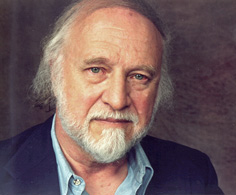
When I was in junior high I owned an anthology of short stories in speculative fiction titled "Possibilities," which I just loved.  It included weird, twisted tales like those that appeared on "The Twilight Zone" and "Night Gallery."  One of my favourites was called "Button, Button." It's about a couple who find a box at their doorstep.  Inside is a mounted push button and a note explaining that the couple will receive $50,000 if they press the button.  The catch is that if they press it, someone in the world will die.  The rest of the story is about the couple's decision.  I hadn't thought about this for many years until I read that a new film, "The Box," starring Cameron Diaz, will be released next year based on this very story.  That led me to finding out the name of the author of "Button, Button," which turned out to be Richard Matheson (the guy in the picture above).  And that led me to reading more about his other contributions.  Oh my!  It turns out that many of my favourite stories, TV shows, and movies from the '70s and early '80s were written by Matheson, but I had no idea that he was the common thread among all these works.  Among his many accomplishments:
  • he was one of the original writers for "Twilight Zone" and he wrote two episodes of "Night Gallery"
  • he wrote the story and screenplay for "Duel," Steven Spielberg's first major work, which featured motorist Dennis Weaver being terrorised by an unknown trucker for the entire movie
  • he wrote the novel and screenplay for "Somewhere in Time," starring Christopher Reeve (definitely a sentimental favourite of mine)
  • he wrote one of the first teleplays that led to the eerie TV show "The Night Stalker," starring Darren McGavin, which was sort of the "X-files" of the early '70s
  • he wrote the episode for the original "Star Trek" that introduced Spock's "Vulcan grip"
  • he wrote "I am Legend," which has been filmed in various forms over the years
Here's a fuller summary of his life and work (he's now 82).  It's amazing that all of this stuff I loved during my adolescence were all products of the same mind.  Now I want to reread "Button, Button" and some of Matheson's other works, but I'll probably have to wait until I go back to the States in November to find his books, as I haven't been able to locate more than one of two of them here.

Thursday, September 18, 2008

Small Doses of Hypocrisy Can Always Do You Good

I enjoyed this clip from "The Daily Show" (thanks for sending it, Matthew!):


Wednesday, September 17, 2008

Sometimes I Just Disappear

One of the more embarrassing aspects of being a researcher is that many of us are obsessed with reading the reference sections of new articles in our field of interest to see whether we are cited.  In my case, possibly because of a drop in my productivity a few years ago, I am quite used to not finding my name listed in articles in my field. I can live with that, and I am now attempting to rectify this omission with greater productivity. However, every once in a while I come across a review article or a particular passage that is directly related to my published work but I am still not cited.  In the past week this has been a frequent experience while I was preparing a lecture on the social neuroscience of prejudice and stereotyping.  Amazingly, researchers I know well who have attended my talks at various conferences or were even on the same conference panel as me, simply don't mention anything that I have ever done in the past 10 years in their articles.  It leaves me feeling a bit sad, and it reminds me of the way that Kip Williams describes what it's like when someone ostracises you.  I'm paraphrasing here, but he said that being shunned by others "is similar to what would happen if you were dead. You experience life as if you didn't exist."  When people I respect don't find any of my work relevant to theirs (although I find what they do highly relevant to mine!), it feels like I never existed.  If I don't exist, then it begs the question: What have I been doing these past fifteen years when I was conducting and writing up all this research?  In an occupation that has few rewards, recognition by one's peers becomes that much more important.

Tuesday, September 16, 2008

Here Comes the Judge

In the social neuroscience course that I am currently teaching, students put on a mock trial last week involving a defendant who supposedly had a brain injury that led him or her to commit a violent crime.  The course is broken into four tutorials ("discussion sections," in American parlance) with 25-30 students each, and I am teaching one of them, in addition to giving all the lectures.  Anyway, during the preceding week's tute, when the students were preparing their mock trial, I started asking them questions about the Australian/Queensland court system.  I was amazed that nearly everyone in the room had little or no knowledge about what actually happens in an Australian courtroom.  One student said, "we only know what happens in an American courtroom because of television."  When I asked, for example, if an Australian defendant has the right to choose whether he or she takes the witness stand (as they do in American courtrooms), my students had no idea.  When deciding on the order of events during the trial, we ended up relying on what they do in an American courtroom out of ignorance of what goes on in an Aussie one.  It was really quite astonishing to me that university students didn't know about their own local legal procedures and rights.  I have since confirmed some of those procedures and rights with my resident jury research expert, who informed me that some jury trials in Queensland will soon no longer require a unanimous verdict.  I am committed to learning more about all of this before I teach the course again.

In a small nation like Australia, it's perhaps not surprising that people can know more about some aspects of American society than their own, simply because of all the movies and television shows that come out of Hollywood.  I still find it unsettling that there are few Australian-produced dramas on television here.  Today's Australian-produced TV shows mainly consists of game/reality shows, sing-a-long and other talent contests, a handful of dramas, and perhaps one or two Aussie sitcoms.  The rest of the airtime is chock full of American sitcoms and crime dramas.  I still can't figure out how they manage to have their own television awards show here.  Thank goodness for the ABC and SBS.  Or, as an alternative, perhaps I should just pick up a good novel about an Australian barrister facing the perils of the High Court.  Do you have any suggestions?  Is there a sort of Aussie version of John Grisham out there, perhaps?

Sunday, September 14, 2008

Not So Unique

Thanks to my settings on Google Alerts, I am notified the moment my name newly appears on a web page.  I set this up a few weeks ago, and didn't receive any notices for days.  But then, last week, I was notified that my name had just appeared on Classmates.com.  That's not such a big surprise, as I get messages from that site all the time.  However, it turned out that the Eric Vanman newly appearing on the site was ANOTHER Eric Vanman, who is a high school student in Canada.  Yes, there is another "me" out there and he still has nearly his entire adult life ahead of him!  I've spent my life believing that I was the only person in the world with my name, but it turns out that it was an illusion.  Still, this other Eric Vanman must be a distant relative.  I will have to investigate.

Friday, September 12, 2008

Because I CAN Vote

Update: My favourite blogger, Audra, has corrected a huge mistake I made in the original posting of this entry.  It turns out the Oct. 6 is the deadline for registering overseas absentee ballots, and 180 days before the election is when one can begin to apply for the ballot!  I can vote after all!  If any other American ex-pats are interested, check out this site, the Overseas Vote Foundation, where you can get all the (correct) details.

Stupid me.  I waited too long to look into how to register for an absentee ballot to vote in the upcoming U.S. election.  It turns out that the deadline for the application for registration is 180 days (6 months!) before the election, which I clearly missed.  Why so much time is required to process these applications makes little sense to me.  To make amends, however, I will continue to use space in my blog to broadcast sensible information and opinion about the election, in hopes that some of my far-right relatives decide to read it someday.

Today I want to point you to a blog entry that V. forwarded to me from an email from our friend Donna.  It's written by Deepak Chopra, a man I know little about, but I sure do like his blog.  Here's part of what he wrote on Sept. 4 about Sarah Palin, titled "Obama and the Palin Effect:"
I recognize that psychological analysis of politics is usually not welcome by the public, but I believe such a perspective can be helpful here to understand Palin’s message. In her acceptance speech Gov. Palin sent a rousing call to those who want to celebrate their resistance to change and a higher vision.

Look at what she stands for:

–Small town values — a nostaligic return to simpler times disguises a denial of America’s global role, a return to petty, small-minded parochialism.

–Ignorance of world affairs — a repudiation of the need to repair America’s image abroad.

–Family values — a code for walling out anybody who makes a claim for social justice. Such strangers, being outside the family, don’t need to be heeded.

–Rigid stands on guns and abortion — a scornful repudiation that these issues can be negotiated with those who disagree.

–Patriotism — the usual fallback in a failed war.

–”Reform” — an italicized term, since in addition to cleaning out corruption and excessive spending, one also throws out anyone who doesn’t fit your ideology.

Palin reinforces the overall message of the reactionary right, which has been in play since 1980, that social justice is liberal-radical, that minorities and immigrants, being different from “us” pure American types, can be ignored, that progressivism takes too much effort and globalism is a foreign threat. The radical right marches under the banners of “I’m all right, Jack,” and “Why change? Everything’s OK as it is.” The irony, of course, is that Gov. Palin is a woman and a reactionary at the same time. She can add mom to apple pie on her resume, while blithely reversing forty years of feminist progress. The irony is superficial; there are millions of women who stand on the side of conservatism, however obviously they are voting against their own good. The Republicans have won multiple national elections by raising shadow issues based on fear, rejection, hostility to change, and narrow-mindedness.
I am trying to stay optimistic about the future, but I am afraid that John McCain's crafty choice for VP is going to lead us all down the wrong path.

Thursday, September 11, 2008

Another September 11th

As I finished the day in my office at work, I listened to the tracks of "America: A Tribute to Heroes."  These songs were recorded during that mysteriously produced show that appeared on all of the major American TV networks ten days after the 9/11 attacks.  I am not normally a patriotic person, but those weeks in 2001 deeply affected me and watching the concert that night while visiting my brother in Illinois did a lot to reduce the internal chaos I was experiencing at the time.  The album itself starts off with Bruce Springsteen's chilling "My City of Ruin," the lyrics of which were hauntingly appropriate for the moment, although Springsteen had written it months before.  Other highlights include Billy Joel's "New York State of Mind" and U2's "Walk On." In both of those tracks you can clearly hear Joel's and Bono's voices crack with the emotion that tainted everything that night.  The album ends with Willie Nelson leading a bunch of all-stars through a somewhat sad rendition of "America the Beautiful."  Listening to these songs on the seventh anniversary of that horrible day has left me with an overwhelming sense of homesickness.  I do miss the U.S.A.-- from sea to shining sea.

Wednesday, September 10, 2008

The End

I learned from a colleague today that the world will disappear into a black hole in the next month or two. A giant particle accelerator was switched on today in Switzerland, but it's what will happen next that worries my co-worker.  By November the researchers will begin the actual collisions of their particles in the accelerator, and that's when a black hole might form "accidentally." Today's New York Times article tries to reassure us by pointing out that since the 1840s there have been similar predictions of scientific doomsdays that, of course, didn't live up to their hype.  I really don't think that being sucked into a black hole is such a bad way to go--you and everyone you know (including Sarah Palin and Charlie Sheen) would disappear in less than a second.  We wouldn't even know that we had ever existed, nor would anyone else. In fact, your perception that you are reading this blog might just be the remnants of a dream that is drifting around in the emptiness of the universe forever.  And, isn't the risk of our complete annihilation really worth it, if it means that we may finally get to learn whether the Higgs boson actually exists?

Monday, September 8, 2008

My Electric Feel

Thanks to a recent Saturday morning viewing of "r a g e", I came across "Electric Feel" by MGMT. The trippy video I saw is available here on YouTube, but for some reason Sony BMG has decided to disable embedding. The video posted below is an older version, possibly made by a fan, but the music is the same.  Listening to it makes me start jumping around the office like a bonobo.


I think I like this one because I was called "Eric the Electric Banana Peel" when I was kid...

Sunday, September 7, 2008

The Day of a Happy Father

I woke up today not remembering that it was Father's Day.  For the past two years I have been lucky enough to celebrate four Father's Days--I was in the U.S. last year and the U.K. this year for their June holidays, and then I got the bonus Australian holiday each time,celebrated on the first Sunday in September.  Anyway, after opening my presents from Will and his mum this morning, we loaded up the car and drove up to the Sunshine Coast for the day.  We had breakfast at a café in Mooloolaba, where Will had his usual "baby chino" and we all had waffles. We then drove further north towards Noosa, stopping a few kilometres short of there to go to Sunrise Beach.  There must have been no more than 20 people within a kilometre of us on the beach itself.  Will had a great time exhausting his parents by running around and threatening to drown himself in the surf.  We also had a chance to work on his sandcastle building skills.  Unfortunately, right now Will is more pleased with knocking down a pillar as soon as it's built rather than adding to it, so in the end there wasn't much to show for our efforts.  The weather was absolutely perfect, and V. and I sang along to '80s hits on the radio on the way home.  Once home I did a quick run to the grocery store while V. got Will ready for bed.  Our dinner was lamb burgers topped off with Greek-style yoghurt and accompanied by juicy corn on the cob.  Now, that's a meal that would have been a challenge to make (at an affordable price) back in the States. 

Yes, I had a perfectly happy Father's Day!

Friday, September 5, 2008

Time Zones

Phil Zimbardo was in Brisbane yesterday to give a talk to customers of his textbook publisher.  You have probably heard of him if you know anything about the Stanford Prison Experiment.  This was the 1971 study in which subjects were assigned to play the role of a prisoner or a guard in a mock prison in the basement of Stanford University.  All sorts of interesting things happened, which you can read about here, but the experiment led Zimbardo to study many related issues over the next 35 years.  Yesterday's talk was not about those issues nor did he promote his best seller, The Lucifer Effect (although he did sign my copy!).  Instead, his 75 minute presentation was about time--a topic that I have written about before in this blog.

Zimbardo has developed and validated a research questionnaire that measures five main dimensions of a person's time orientation.  He argues that most people are not aware of where they lie on these dimensions, but these 'time zones' strongly influence what we do at any given moment.  Here's a brief description of a high score in each zone:
  • past positive:  someone who frequently thinks about their past in a positive way; strong ties to family and friends; likes traditions; particularly resistant to new things
  • past negative: someone who frequently thinks about their past, but in a negative way; tends to think of themselves as a victim of abuse, neglect, bad circumstances; strongly associated with depression
  • present fatalistic: someone who thinks only about today, but largely from a "how am I going to survive today?"; believes there is little they can do to control their futures, so they tend to be reactive rather than proactive; more common in people with impoverished lives
  • present hedonistic: someone who lives in the moment, trying to maximise their pleasure and minimise pain; they tend not to carry watches, schedule appointments, and are frequently late; strongly associated with addiction; most likely to enjoy sex; little no or concern about the consequences of their actions
  • future: these are people who are most likely to think about the consequences before taking action; they tend to have highly scheduled, busy lives; tend to be most successful of the five time zones; experience more anxiety but less depression; more socially isolated; fewer sensual pleasures
It's an interesting framework to think about many personal and societal problems, and Zimbardo has about 20 years of research on all of this.  For example, he finds that Stanford students who score high on Future do better in all their classes, whereas Present Hedonists only do well if it's a class they like.  Minority students from impoverished backgrounds tend to be Present-oriented, which puts them at a disadvantage in school because they don't tend to think about the probabilities of different outcomes.  Societies with many people in Past-Positive (think of Sarah Palin and her friends at the Republican Convention!) tend to be slow to change, and will likely have more problems with increasing globalisation.  The closer one is to the equator, the more you find Present oriented people, probably because they don't have to worry about the change of seasons.

According to Zimbardo, it's best to have a mix of the time zones to offset the negatives of each.  The optimal profile is to be high in Past-Positive, mid-high in Future, and mid in Present-Hedonist.  That is, have rich positive connections to your past with a good dose (but not too high) of a future orientation and ample enjoyment of the moment.  Reaching such an optimal balance can be challenging, however, depending on where you live, what you're up against, and your life experiences.  Here's a link to his book, if you want more info.  He also spoke about some trends in American society, a country that is probably overloaded with Future people.  A USA Today poll in 1987 found that 59% of respondents had a family dinner each day, whereas today it's 20% that do.  More than 50% of today's respondents say they are busier this year than last year.  What did they tend to sacrifice to make up the time?  Friends, family, and fun.  What would they do if they had an extra day in the week?  Most said they would use it to catch up with work.  

I found this talk highly stimulating.  Interestingly, Zimbardo rarely refers to biological processes in his work (he's a strong environmentalist).  I'm thinking that social neuroscience could help flesh out some of the details.

Monday, September 1, 2008

Choices Speak Louder than Words

Whenever I call either of my parents back in the U.S., both of whom are supporting Barack Obama but live in different states, I am amazed by their stories of people they know who just "hate" Obama.  That is, they don't just disagree with his policies, they LOATHE the man.  By contrast, as much as I think Bush Jr. has screwed up so many things, I can't muster enough emotion to hate the guy.  Nevertheless, I have a relative who regularly forwards email racist rants about Obama that have just horrified me (most seem to originate with those same idiots behind the Kerry swift boat scam, but that doesn't seem to matter).  When I sent a reply countering many of the ridiculous untruths in her one of her emails, I received a terse "Thanks for your opinion, Eric," and I was immediately taken off her mailing list.  All this vitriol is another sign that America has become terrible polarized in the last decade, and it makes me worry about the future.  I suspect that the basis of these reactions has to do with race and the misperception that Obama is somehow tied to radical Muslims, but most of these Obama haters tend to deny their implicit racism, and they feel justified about hating Muslims anyway.  

And, to add to my worries, McCain has now made a terrible choice for a VP candidate that says much about his (a) mental state, (b) low regard for the presidency, (c) beliefs about affirmative action, and (d) lack of concern for the rest of the world.  Even the fairly conservative The Australian ran a column today titled "Reckless pick bad news for Australians."  Geoff Elliott writes: 
"What McCain has done in selecting Palin is an entirely political decision to win him the general election, which proves again that self-interest always triumphs in politics.

But in terms of foreign policy, in which Australia has most interest, this is a reckless move and potentially stressful to our alliance in the event that early in the next administration Palin were elevated to the presidency."
What gives me comfort, however, is reading the twice-weekly columns of one of the last sensible people in America, Maureen Dowd.  Her words are always laced with irony and wit, and today's column is no exception.  In "Vice in Go-Go Boots," Dowd suggests that the very people who staunchly oppose affirmative action will have no problems with the way that McCain has picked someone who is so utterly unqualified for one of the most important jobs in the world. Here's an except, but please read the entire column if you have the time:
The guilty pleasure I miss most when I’m out slogging on the campaign trail is the chance to sprawl on the chaise and watch a vacuously spunky and generically sassy chick flick.

So imagine my delight, my absolute astonishment, when the hokey chick flick came out on the trail, a Cinderella story so preposterous it’s hard to believe it’s not premiering on Lifetime. Instead of going home and watching “Miss Congeniality” with Sandra Bullock, I get to stay here and watch “Miss Congeniality” with Sarah Palin.

Sheer heaven.

It’s easy to see where this movie is going. It begins, of course, with a cute, cool unknown from Alaska who has never even been on “Meet the Press” triumphing over a cute, cool unknowable from Hawaii who has been on “Meet the Press” a lot.

Americans, suspicious that the Obamas have benefited from affirmative action without being properly grateful, and skeptical that Michelle really likes “The Brady Bunch” and “The Dick Van Dyke Show,” reject the 47-year-old black contender as too uppity and untested.

Instead, they embrace 72-year-old John McCain and 44-year-old Sarah Palin, whose average age is 58, a mere two years older than the average age of the Obama-Biden ticket. Enthusiastic Republicans don’t see the choice of Palin as affirmative action, despite her thin résumé and gaping absence of foreign policy knowledge, because they expect Republicans to put an underqualified “babe,” as Rush Limbaugh calls her, on the ticket. They have a tradition of nominating fun, bantamweight cheerleaders from the West, like the previous Miss Congeniality types Dan Quayle and W., and then letting them learn on the job. So they crash into the globe a few times while they’re learning to drive, what’s the big deal?

Obama may have been president of The Harvard Law Review, but Palin graduated from the University of Idaho with a minor in poli-sci and worked briefly as a TV sports reporter. And she was tougher on the basketball court than the ethereal Obama, earning the nickname “Sarah Barracuda.”

The legacy of Geraldine Ferraro was supposed to be that no one would ever go on a blind date with history again. But that crazy maverick and gambler McCain does it, and conservatives and evangelicals rally around him in admiration of his refreshingly cynical choice of Sarah, an evangelical Protestant and anti-abortion crusader who became a hero when she decided to have her baby, who has Down syndrome, and when she urged schools to debate creationism as well as that stuffy old evolution thing.

Sunday, August 31, 2008

Lost in Translation

Every week it seems that I encounter a new Aussie word that requires translation.  For example, a couple of weeks ago there was a story in the paper about "Bowser Rage," in which a man was punched in the face, hit his head on the concrete, and fell into a coma after apparently cutting in line while people were lined up for the next bowser.  What's a bowser, my American readers are asking?  Simple: a gas pump at a service station.  According to the story, about 40% of Queenslanders reported experiencing bowser rage in the past six months.  Oh my!

I confused two students this week while I was giving them feedback about papers.  I told one that some information should be provided in parentheses.  "What is that?" she asked.  I soon learned that many Aussies have no idea that Americans refer to () as parentheses and [] as brackets.  For Australians, both are called brackets.  I told another student that she needed to put a period after "et al" -- which prompted a blank look.  The right term here is "full stop," like the thing that appears at the end of this sentence.

A few days ago I was sent the following video by a Kiwi living here in Brisbane.  Back in March when I was at a conference in Wellington, I couldn't appreciate my Aussie colleagues' laughter about the New Zealand accent.  To tell you the truth, I still have a hard time detecting it.  There seems to be so much variation in Aussie accents that a Kiwi could easily slip in undetected.  The humour of this video was therefore lost on me:


Wednesday, August 27, 2008

Ranting on Meth

Well, here's my vote for the most under-reported story of the year. According to this LA Times story titled, "Men's threat to kill Obama is downplayed," the three men pictured above had vague plans of killing Barack Obama during his trip to Denver for the Democratic National Convention. Interestingly, the U.S. Attorney's Office has decided that their 'plans' were just the "racist rants of drug abusers," as at least one of the men, Nathan Johnson, was arrested with small quantities of meth in his possession. Apparently the media have also downplayed the story, as I haven't seen much about it on any of the major news sites. This is especially puzzling, given that the U.S. Attorney, Troy Eid, "acknowledged that many questions had not been answered, including why the men had high-powered weapons, body armor, two-way radios, wigs, and camouflage gear. It was also unclear why they decided to base themselves in a suburban Hyatt hotel where they believed--erroneously--Obama was staying."

I guess the message here is that no one can take a meth addict seriously.

Monday, August 25, 2008

A Whole of Lot BIRGing Going On

One of the many strategies we all have to boost and maintain our self-esteem is Basking in the Reflected Glory of others, or, as it's known in social psychology, BIRGing. We can do this on an individual level ("my friend just won a gold medal") or as part of the group ("my football team won this weekend!"). One of the puzzling aspects of this phenomenon is that the person doing the BIRGing has usually done nothing to assist the other person with the success or good fortune, but somehow finds pleasure in knowing that they are connected to this successful person in some way. By the way, the opposite of BIRGing is CORFing (cutting off reflected failure). One famous social psychology study found that Ohio State students were much more likely than normal to wear their OSU apparel on Mondays following a win by their football team, but they were also less likely to wear such clothes on Mondays following a loss. Both BIRGing and CORFing have a very public element associated with them--our friend (or team's) success (or failure) has special value when it is broadcast to others. Well, what follows is a bit of such broadcasting, but I am going to stick to BIRGing for now...

Over the years I have been guilty of BIRGing along two general categories--my friends' connections to the famous and my friend's noteworthy successes. As examples of the former category, my friends have included (a) a relative of Allen Ginsburg, (b) the target of a pick-up by Tori Spelling (my friend refused her advances, btw), (c) someone who was employed to be a "friend" of the daughter of a famous billionaire, (d) the daughter of a Hollywood film director, and (e) someone who lives in Kevin Bacon's building (which gives me all sort of "six degrees" connections!). The other BIRG category is probably more impressive, as they include a friend who is a successful TV and film actor, the bass guitarist for a great '80s/'90s band, many highly productive academics, a top journalist, a successful artist, and several friends who are now department chairs or deans. Today I can add another high school classmate to the list--Dan Gesmer, who runs a successful skateboard business and is a performance artist. Dan invented a style of freestyle skateboarding that you can see in this video. What's more, he was recently asked by Cirque de Soleil to become part of their winter show, Wintuk, in New York City. This is the first Cirque show to feature skateboarding, and it looks like they specifically recruited Dan to perform based on some of the videos he has made.

Wow! I know someone who has performed with Cirque de Soleil!! I'm on BIRG overload today!!

Sunday, August 24, 2008

For the Love of Sport

V. and I have spent a fair bit of time in the past two weeks watching the 40+ billion dollar Olympics. Australian television coverage is about as biased as what I have seen in America on NBC. And, again the two of us have been suckers for the mythology surrounding "heroes" and "drug-free" sports like everyone else who watches. When I was growing up I had a great appreciation for the "amateur" status of the games, although I was quite ignorant then about how other nations were pumping millions into their Olympic athletes to put on a good show every four years. I have always held a bias against big money sports, so that's why I found special pleasure in watching the Australian synchronised swimming team, which is entirely self-funded and has no corporate sponsorship, in contrast to watching men's basketball or tennis, with their millionaire players. Still, I do get caught up with the drama of some of the competitions (the cycling in the velodrome was awesome!) and I admire the discipline and devotion of so many of the individual athletes. I have found myself cheering for both the Aussies and the Americans, but I certainly cannot see how any of this seriously helps or hurt international relations. Some fans, however, do get quite wound up about all of this. Last week, for example, the Sunday Mail here in Brisbane featured an article with a headline suggesting that state secrets were being sold to China. It turned out to be a story about an Aussie swim coach who has sold his training techniques to the Chinese because they apparently made him an offer he just couldn't refuse. Although he's been doing this for quite a while, and he has a number of other international clients who send their swimmers to Queensland to learn his "secret" training methods, no one here was really upset about any of his affairs until the Chinese swimmers beat one of his own Aussie women, who ended up with just a bronze medal. The following letter appeared in today's edition of the Mail. I think it captures the "real" spirit of the Olympic games:
I am appalled that Australian swim coach Ken Wood would stoop so low as to sell his secret coaching methods to China, while still maintaining his position as coach to our own Olympians. Because of this methods, Australian swimmers are now leading the world with extraordinary performances. It's a pity he won't be remembered for his exceptional talent. Instead, he'll go down in history as a traitor. His excuse is he did it for the money. A fair dinkum Australian coach would manage on a pension before sleeping with the enemy. Australia should return home next week one member short--him. Leave him in China.

Thursday, August 21, 2008

Psychology Online

I came across this page at PsychCentral today.  It includes a list of the 'Top Ten Online Psychology Experiments.'  It's a dream of mine to develop a line of research in which participants could be recruited from around the world, but I haven't yet figured out what I might explore using the internet.  Anyway, check out my favourite site on this list, FaceResearch.org.  I recently learned that I might be able to recruit a patient with acquired prosopagnosia, which is the inability to recognise familiar faces.  A little over 100 hundred such patients have been identified in the world, so I am planning an experiment with this patient that might reveal more about how we emotionally process faces.  FaceResearch.org has plenty of interesting stimuli that I might use.

Monday, August 18, 2008

Sold!

Yes, we finally sold our house back in Atlanta!  It took 18 months and we suffered a huge loss, but the final transaction took place last Friday.  In the days before the closing I was up late making panicky calls to figure out how to move enough cash from our account to cover the balance at the lawyer's office.  I was told repeatedly that I should wire the money, but I couldn't do this without going to my bank in the States in person.  Then I ran into some maximum daily limits that stretched the transaction over three days.  I shudder when I think of all the fees I paid in my haste to get this done in time.

Alas, we no longer have a home in the States.  We have moved to Australia.

Friday, August 15, 2008

The Count

After living in Australia for nearly 14 months, here's how many famed Aussie animals that I have seen in the wild:
  • kangaroos-0
  • koalas-0
  • emus-0
  • snakes-0
  • venomous spiders-0
  • scary-looking, but 'harmless' spiders-100s
  • water dragons-70ish
  • bush turkeys-100s
  • bandicoots-0
  • Tasmanian devils-0
  • whales-5
  • ibises-100s
  • possums-3
  • kookaburras-30 or so
  • platypuses-0
A pretty sad tally, huh?  Thank goodness for the Australia Zoo.

Wednesday, August 13, 2008

The Wednesday Holiday

As I mentioned in my previous post, today is a public holiday in "the Brisbane area." I'm not really sure how far this extends from my present location, which is in my office at UQ, but I am guessing that no more than 2 million people are affected. The purpose of this Wednesday holiday is supposedly to give local residents a chance to attend the Ekka, the big annual exhibition that runs for 10 days total. A relatively small proportion of the 2 million people who have this day off will actually attend Ekka today (I think the normal Ekka day attendance is in the tens of thousands), so I just don't get the logic of this Wednesday holiday. Why did they choose Wednesday in the first place, and why wasn't it Friday instead? If the concern is that giving a 3-day weekend to local residents would make it more likely that some of them would leave the area instead of going to Ekka, would it really end up being much lower than the figures for today's attendance? Certainly the costs to local businesses in giving everyone this day off, coupled with the loss of sales to those who are outside "the Brisbane area," far exceed the extra revenue generated by those who attend Ekka today anyway. Oh well. At least it gives me some extra time to catch up with my work. I wish I had a Wednesday public holiday every week.

Sunday, August 10, 2008

Learning About Marriage and Chooks

Today was our second of what we hope will become annual trips to Ekka, the "state fair" of Queensland.  Ekka goes on for 10 or 12 days in the heart of Brisbane, and there is even a public holiday next Wednesday to encourage residents to go.  This was my third Ekka, my first occurring back in 2001 during an earlier trip to Brisbane.  I just love it.  If I could afford to miss work, I would come back a few times each year so that I could visit all the exhibits and watch the demonstrations.  With Will in tow, V. and I were able to manage about four hours today before it was time to take him home for a nap.  Some highlights this year:
  • Will's first amusement park rides, involving boats, cars, planes, and trains.  It went fine until he tried to climb out of his moving boat so that he could go on the train ride.
  • the pony competition (pictured above)
  • the poultry and waterfowl exhibition, which featured some of the most beautiful roosters I have ever seen
  • a 'horse whisperer' demonstration
  • a greyhound competition
  • Will's first showbag (see last year's 'Gone Whaling' post for an explanation): Thomas the Tank Engine
One other highlight was watching someone recite "Bush poetry" for a small crowd of mostly families.  A nice country bloke recited these poems without any notes, and both Will and I were spellbound as he spoke.  One poem was titled "Don't Get Married Girls." I was quite amused at some of the passages of this one.  Keep in mind that there were many kids in the audience, and more were filing in for a sheep shearing demonstration coming up next:
So don't get married, girls, men are all the same
They just use you when they need you, you'll do better on the game
Be a call girl, be a stripper, be a hostess, be a whore
But don't get married, girls, for marriage is a bore
I am certain if someone uttered these same lines in front of a group of children at the state fair in Georgia, there would be quite an outcry from concerned parents.  Instead, at the Brisbane Ekka, hearty chuckles filled the room.

Tuesday, August 5, 2008

Take a Tour of Our Neighborhood!

Street View has come to Google Maps Australia.  The advent of a feature that has been available in the U.S. for quite a while has generated some controversy here.  In the past few days, the Aussie newspapers have been highlighting privacy issues (e.g., "there was the man caught leaving his lover's apartment" or "people have been photographed sunbathing topless").  Today's Courier-Mail article included this link to the Streetviewfun top 100 photos, which includes a photo of an accident that occurred just as the Google photo van was passing by.  I think Street View is absolutely cool.  I have explored my old neighborhood in Atlanta as well as my brother's in Illinois.  Now you can explore our neighborhood here in Toowong, Queensland. To get you oriented, that's our two-story apartment on the middle of the picture (behind the pole).  Then continue exploring our street in the Google window below the picture.